

Table of Contents
Author

Prachi Sharma
Solution Analyst, 4DAlert
Database changes are often the biggest barrier to achieving true continuous delivery. Even when application deployments move fast, database changes slow everything down. This gap in process creates deployment friction, production outages, and missed deadlines across development teams.
Poor database DevOps practices don’t just add technical debt — they directly affect business agility and customer experience. When releases are delayed or systems fail, the impact is immediate. On the other hand, teams that integrate database DevOps effectively into their CI/CD pipelines gain faster, more reliable deployments. They can respond to market needs quickly without compromising data integrity or system stability.
Let’s look at the most common pitfalls in database DevOps — and how to overcome them.
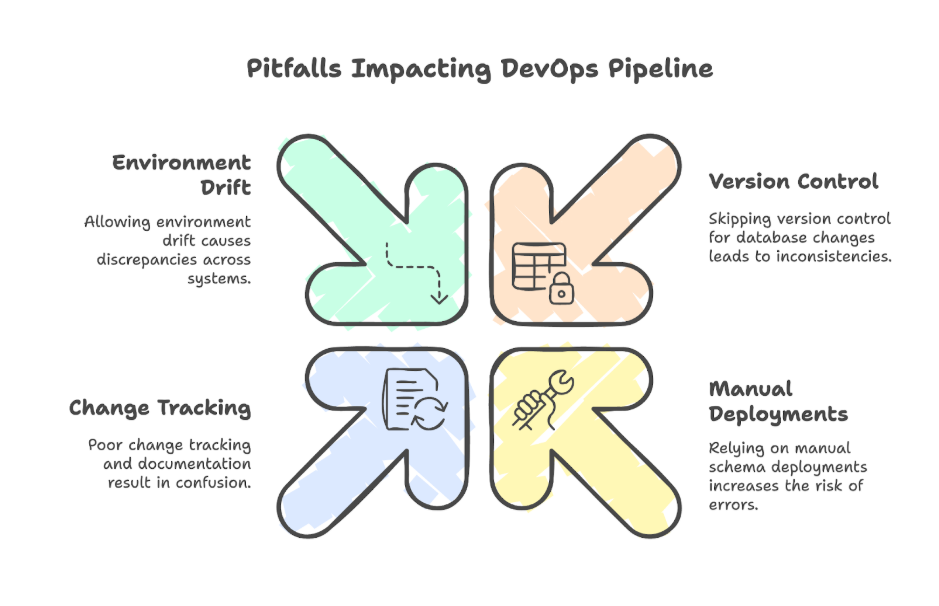
1. Skipping Version Control for Database Changes
Most application code lives safely in Git. But database changes often remain as one-off scripts or manual updates. This disconnect creates serious risks for deployment consistency.
Without proper version control, teams face:
⦿ Unpredictable deployments across environments
⦿ No reliable way to identify the current database state
⦿ Difficulty rolling back failed changes
⦿ Confusion over which updates were applied
The result? Inconsistent deployments, failed rollbacks, and delayed releases.
The Real Cost: Missing version control for schema changes leads to compounding technical debt. It’s responsible for almost one-third of production issues, and recovery takes three times longer than application failures. Implementing version control is essential for predictable and safe database deployments.
2. Relying on Manual Schema Deployments
Running SQL scripts manually might seem faster, but it’s risky at scale. Many teams skip proper processes “just this once,” which often ends in disaster.
Manual deployments cause:
⦿ Human errors during execution
⦿ Differences between tested and deployed environments
⦿ No validation before production updates
⦿ Poor synchronization with application releases
The Real Cost: Manual schema deployments go against the principles of database DevOps. They slow down releases, create environment drift, and increase technical debt. Over time, these issues build up and make your release pipeline harder to maintain.
3. Poor Change Tracking and Documentation
When a deployment fails, the first question is always, “What changed?” Without automated change tracking, finding the answer can take hours.
A lack of tracking leads to:
⦿ Time-consuming debugging sessions
⦿ No link between failed tests and schema changes
⦿ Missing audit trails for deployments
The Real Cost: Without visibility, teams waste critical hours investigating issues. On average, this extends incident resolution by up to 90 minutes. A reliable database DevOps toolchain with automated change tracking prevents this by offering complete transparency.
4. Allowing Environment Drift
When development, staging, and production schemas drift apart, it’s a setup for failure. That familiar “it worked in testing” moment usually means environment drift has struck again.
Environment inconsistencies cause:
⦿ Deployments that fail only in production
⦿ Schema validation errors needing emergency fixes
⦿ False positives in pipeline tests
⦿ Index or data-type mismatches that hurt performance
The Real Cost: Environment drift breaks deployment reliability and delays releases by two to three days per incident. The fix is to include database DevOps practices directly in your CI/CD process, ensuring schema consistency across every environment
How 4DAlert Improves Your Database DevOps Pipeline
4DAlert transforms database DevOps from a liability into a competitive advantage with an AI-driven, automated database deployment approach. Here’s how:
Version Control & Change Tracking
4DAlert seamlessly integrates with your existing Git workflow, treating database schemas as first-class citizens in version control. Every schema change is tracked, versioned, and attributed to specific developers, providing complete visibility into what changed, when, and by whom.
In addition to this, 4DAlert follows a declarative approach for database changes, which determines whether to generate ALTER scripts for modifying existing objects or CREATE scripts for new ones. This ensures efficient schema evolution without unnecessary object re-creation, reducing deployment risks and maintaining data integrity.

Automated Deployments Script generation that won’t Break Production
4DAlert takes the hassle out of automated database schema deployment by making it a seamless part of your CI/CD pipeline. Every migration script is automatically generated, validated, and checked for idempotence. With built-in locking mechanisms, 4DAlert ensures database migrations are applied in the correct order without conflicts. Plus, deployment scripts can be effortlessly pushed to DevOps, eliminating manual effort and ensuring a smooth, error-free rollout.
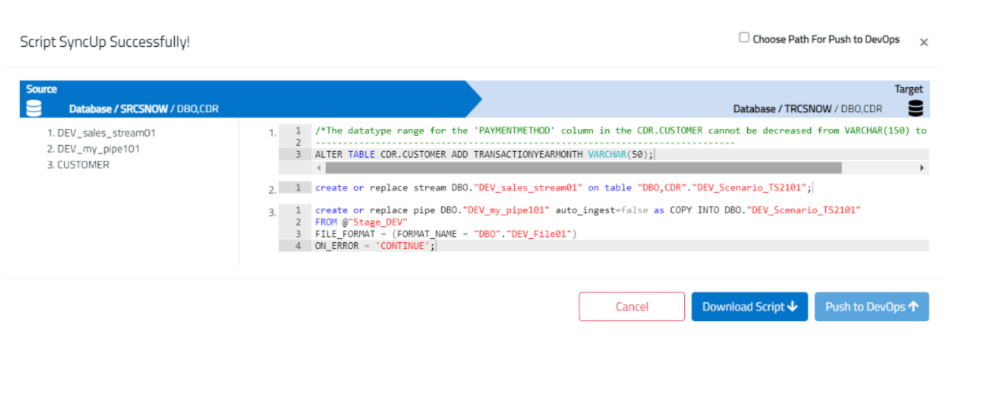
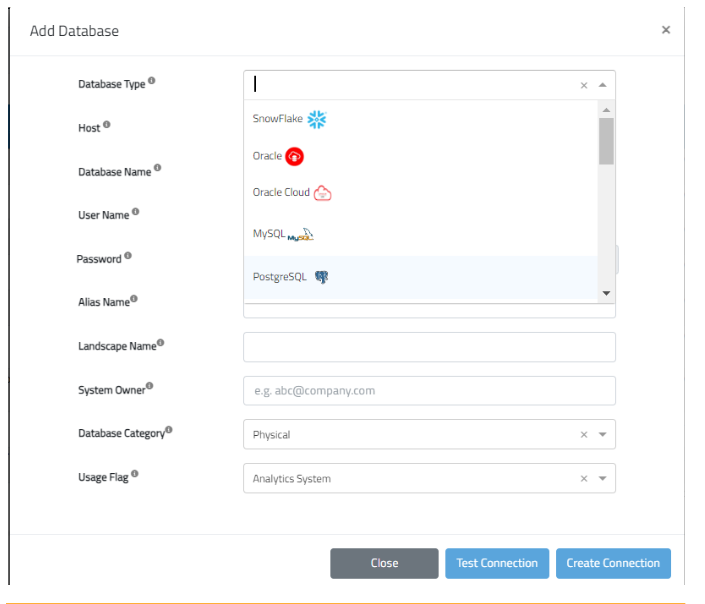
Multiple Databases with Environment Consistency
4DAlert is designed to work with a variety of database types, including Snowflake, Azure, SQL Server, Oracle, and more. Its schema drift detection in CI/CD continuously monitors all environments in your pipeline, automatically flagging inconsistencies before they lead to production failures. With containerized database technology, 4DAlert ensures that development, testing, and production environments stay perfectly synchronized, reducing risk and streamlining deployments.
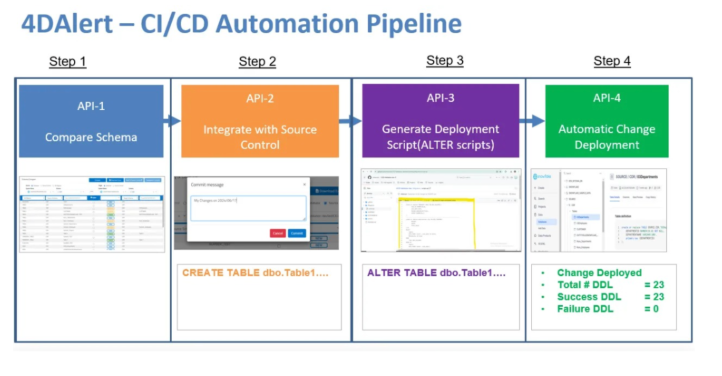
CI/CD Pipeline Integration
The platform features robust connectors for GitHub, SQL, Snowflake, Azure, and more, enabling seamless integration of database changes into DevOps pipelines. Organizations can incorporate automated deployment scripts for SQL into existing workflows without complex scripting, supporting standard concepts like environment promotion and approval gates. This creates a unified CI/CD process that treats database change management with the same rigor as application code while maintaining synchronization between components. These integrations make 4DAlert a cornerstone for modern database DevOps, connecting source control and deployment pipelines seamlessly.”
Stop Losing Hours to Database Issues — Automate with 4DAlert
Database changes shouldn’t disrupt your database DevOps pipeline. 4DAlert automates schema migrations, version control, and database change deployment, ensuring every change is validated, tracked, and deployed seamlessly. Teams lose valuable development time each week due to database deployment issues, impacting productivity and delivery timelines.
A streamlined database automation strategy keeps your pipeline efficient, scalable, and resilient.
Experience the difference with a 30-day free trial of 4DAlert — a modern database DevOps tool for database teams.4DAlert’s automated approach aligns with industry best practices for CI/CD pipelines, helping teams keep schema changes safe, versioned, and consistent across environments. Get full access to the platform, a dedicated onboarding specialist, and seamless integration with your existing toolchain—all at your ease.
For more information, visit www.4dalert.com or contact us at support@4dalert.com.
FAQs
Database change management in DevOps is the process of versioning, tracking, and automating schema updates as part of a CI/CD pipeline. It ensures that database changes are tested, validated, and deployed consistently across environments—just like application code. Tools like 4DAlert help automate schema migrations, reduce human errors, and keep all environments synchronized to maintain deployment velocity and reliability.
Database DevOps integrates database schema changes directly into the CI/CD pipeline, making deployments faster and safer. Instead of handling schema updates manually, automation tools generate validated scripts, maintain version control, and manage environment consistency. This reduces production failures, accelerates releases, and helps teams achieve true continuous delivery for both application and database layers.
Manual database schema changes often lead to environment drift, failed deployments, and extended recovery times. Automating schema changes through a database DevOps tool ensures every update is version-controlled, tested, and deployed through standardized workflows. This not only enhances deployment confidence but also supports compliance, auditability, and performance consistency across all environments.