Published on: October 23, 2024
continous-integration-continous-deployment-Introdution

A Comprehensive Introduction to Database Continuous Integration and Continuous Deployment (CI/CD)

Difference Between CI and CD

(For Snowflake, Synapse, Azure SQL, Oracle and other Modern databases)


The CI/CD methodology has been widely embraced by the software development industry as a critical strategy for improving software delivery’s efficacy and efficiency.


Continuous Integration (CI) allows developers to merge code changes frequently into a shared repository. Each integration triggers automatic builds and tests, helping identify issues early.


Continuous Delivery (CD) builds on CI by automating software release processes. It ensures that software is always in a deployable state, allowing teams to deliver updates to production quickly and safely.

Continuous Integration

Continuous Integration (CI) simplifies the process of code integration and collaboration. Developers regularly combine their code changes in a version control system to maintain a consistent, functional codebase.

Key Stages of Continuous Integration

Commit Phase: Developers commit code to a version control system like Git. This triggers an automated build process.


With 4DAlert, repositories with new commits are automatically tracked. The tool runs processes via GitHub Actions, eliminating manual intervention.


Build Phase: In this stage, source code is compiled, dependencies are linked, and executables are generated. Logging and error detection tools are used to identify issues.


4DAlert displays real-time build progress and alerts developers about any failures or bottlenecks.


Code Analysis Phase: Static code analysis tools check for bugs, violations, or inconsistencies in coding standards.


4DAlert integrates with these tools to deliver instant feedback, ensuring code quality and adherence to standards.


Reporting Phase: The CI system generates reports and notifications summarizing build, test, and analysis results.


4DAlert sends real-time reports to relevant teams, ensuring quick troubleshooting and faster resolution.

Continuous Delivery

Continuous Delivery (CD) automates software deployment across multiple environments. It helps teams streamline the delivery process, reduce manual errors, and ensure consistent releases.

DevOps engineers use top CI/CD tools like Jenkins, CircleCI, AWS CodeBuild, and Azure DevOps to automate the delivery pipeline.

Build Stage: The system fetches source code, configures dependencies, and compiles it into binaries.

4DAlert continuously monitors the build pipeline, providing instant updates on build status, failures, or errors. It also speeds up feedback from code analysis tools.

Test Stage: This stage includes dynamic, functional, regression, and performance testing. Automation makes these processes faster and more reliable.

4DAlert tracks all test executions and sends real-time alerts on pass or fail outcomes for quick fixes.

Deploy Stage: The application is deployed to the target environment, and all necessary configurations are completed.

4DAlert provides live feedback during deployment, instantly alerting teams of failures and triggering rollback if necessary.

Verify:Before releasing to the market, teams perform automated testing, staging, and performance verification. Canary releases and rollback policies minimize risks.

Monitor: Monitoring ensures performance stability in production. Real-time logs and alerts help detect potential issues early.

4DAlert integrates with monitoring tools to provide live alerts about performance degradation or system failures.

Respond: Incident response involves quick rollbacks and issue resolution. Post-incident analysis improves future response strategies.

4DAlert assists in incident management by alerting on-call teams, automating rollbacks, and recording incidents for analysis.

Difference Between CI and CD

Continuous Integration (CI) focuses on frequently merging code changes into a shared repository. It enhances collaboration, minimizes integration conflicts, and ensures a stable codebase through automated builds and tests.


Continuous Delivery (CD) extends CI by automating the entire software release pipeline, from testing to deployment. CD ensures that the software is always production-ready, allowing teams to release new updates with minimal manual effort.


Together, CI/CD creates a streamlined and reliable development workflow. It reduces risks, increases delivery speed, and enables teams to respond to user needs more efficiently.


Managing Database Schema with CI/CD Using 4DAlert

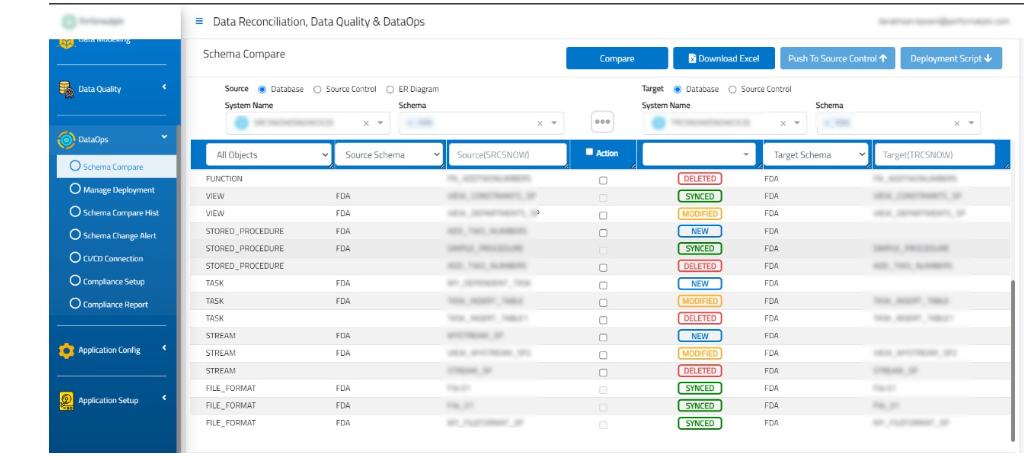
In modern software development, managing database schema changes is a crucial part of the CI/CD process. Comparing schemas with source control tools like GitHub, Bitbucket, or Azure DevOps ensures version accuracy and traceability.

4DAlert simplifies this process by supporting schema comparisons across databases such as Snowflake, Redshift, and Synapse. Developers can push schema changes directly to source control, ensuring that every version remains synchronized.

For example, when using Snowflake with DevOps, 4DAlert automatically maintains the latest DDL definitions as the default version. It also provides complete object change history, allowing users to review snapshots at any time.

4DAlert-dashboard-integrated-with-GitHub-and-Azure-DevOps-showing-version-control-for-database-schemas-across-environments-with-clear-visuals-of-schema-versions-and-changes-ensuring-consistent-and-efficient-database-management

Conclusion

Integrating CI/CD into modern development practices has transformed how teams build, test, and deploy software. Automated pipelines enable faster releases, improved collaboration, and reduced human error.


For database-driven applications, seamless schema integration and deployment are essential. 4DAlert enhances CI/CD pipelines by automating processes from code commit to deployment. With real-time alerts, rollback automation, and efficient schema management, 4DAlert ensures smooth, reliable software delivery for modern development environments like Snowflake, Synapse, Azure SQL, and Oracle.


Looking to deepen your understanding of CI/CD?


Check out our other blogs: 


https://4dalert.com/ci-cd-re-imagined/


https://4dalert.com/democratize-automate-ci-cd-schema-compare-and-automatic-change-deployment-process/

Â