

Table of Contents
Author

Prachi Sharma
Solution Analyst, 4DAlert
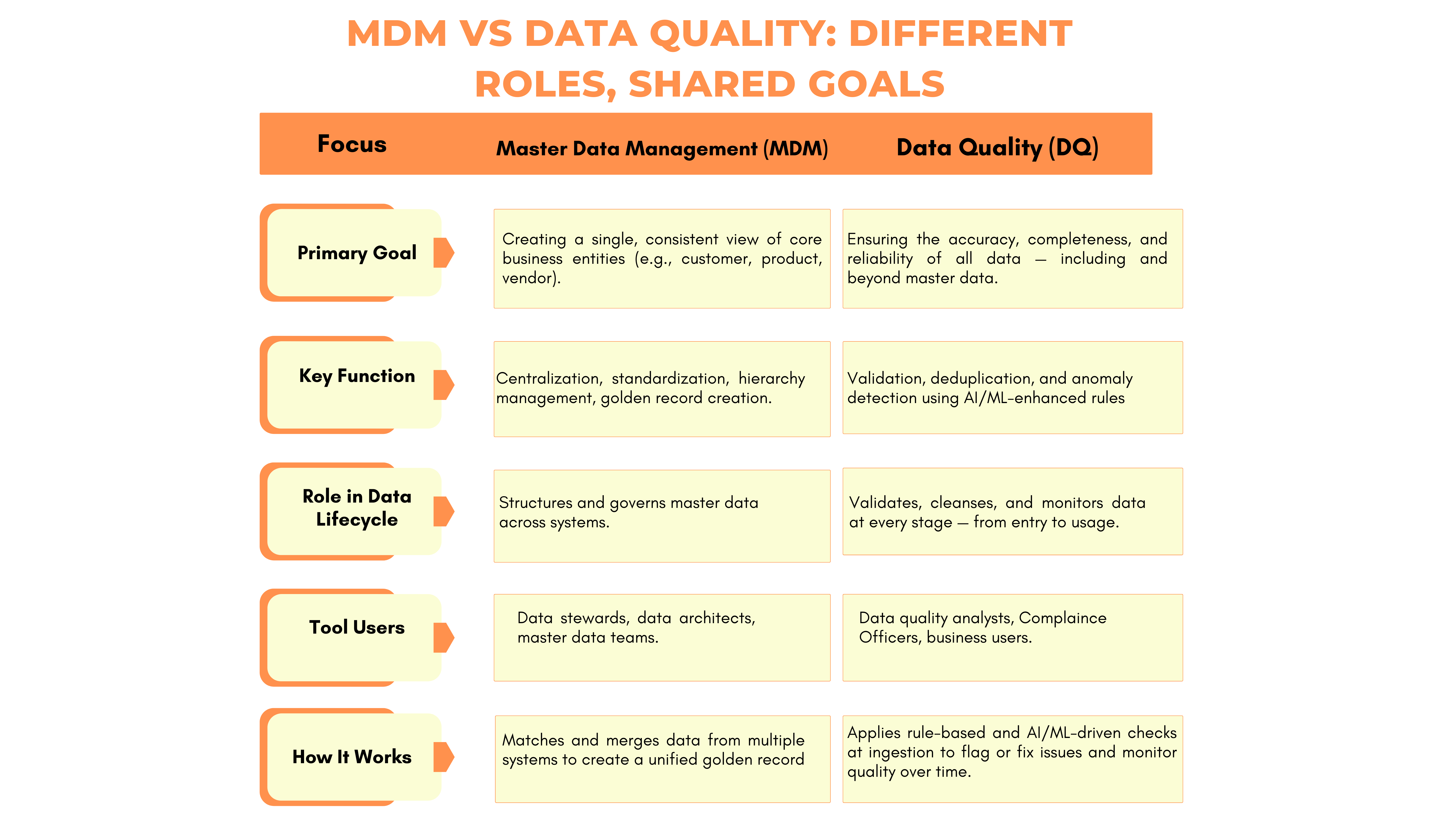
When organizations talk about fixing their data problems, the first thing they often turn to is Master Data Management (MDM). It makes sense — when customer, product, and supplier data are scattered across multiple systems like Salesforce, D365, and SAP, the business can’t operate with confidence.
But focusing on MDM solutions alone doesn’t solve the full problem. Having a centralized repository of master data means little if the underlying information is inaccurate, incomplete, or duplicated. That’s where Data quality management comes in. While MDM software structures and governs your core business entities, data quality tools ensure the content of those entities is trustworthy, accurate, and complete.
So, the real question is: Are Master Data Management and Data Quality just two separate solutions, or do they actually complement each other in a larger enterprise data management strategy?
In this blog, we’ll explore their roles, where they intersect, and why treating them as a pair (rather than a choice) might be your smartest move yet.
Too Many Systems, Not Enough Alignment
Enterprise IT ecosystems are inherently complex — with Salesforce managing CRM functions, Dynamics 365 handling operations, SAP or Oracle as the backbone ERP, and often a layer of legacy or custom-built applications.
The outcome? Fragmented master data.
Customer records often end up duplicated across platforms, while product attributes are inconsistently defined and mapped. System updates don’t always propagate across the entire application landscape, leading to mismatched data. And on top of it, manual reconciliation quickly becomes a recurring operational bottleneck.
Even with Enterprise Master Data Management (MDM) in place, initiatives falter without a strong foundation of data quality. Consistency, synchronization, and governance are critical — otherwise, MDM platforms become just another layer masking deeper integrity issues.
Why Data Quality Can’t Be an Afterthought
Let’s say you’ve built a clean-looking MDM system. You’ve connected your ERPs, defined the Golden Record, and mapped all the fields. But what happens when duplicate customer records flow in from Salesforce and SAP? Or when product details are missing key attributes?
Even the best-structured Master Data Management framework becomes unreliable if the data it’s consolidating isn’t trustworthy. Worse centralized poor data now looks official. That’s why data quality management and Master Data Management software aren’t redundant; they’re complementary. (Learn more about maintaining consistency between MDM and Data Quality in this Dataversity guide.)
MDM processes must actively embed data quality from the start validating, cleaning, and enriching records as they’re created or ingested. This proactive approach ensures businesses not only manage their data efficiently but also build deeper trust in it.
So, should organizations manage MDM and Data Quality with separate tools — or unify them through a single integrated solution?
When organizations unify MDM and Data Quality within a single cloud-based MDM platform, they transform how data flows and is trusted across systems. Here’s why this integration matters:
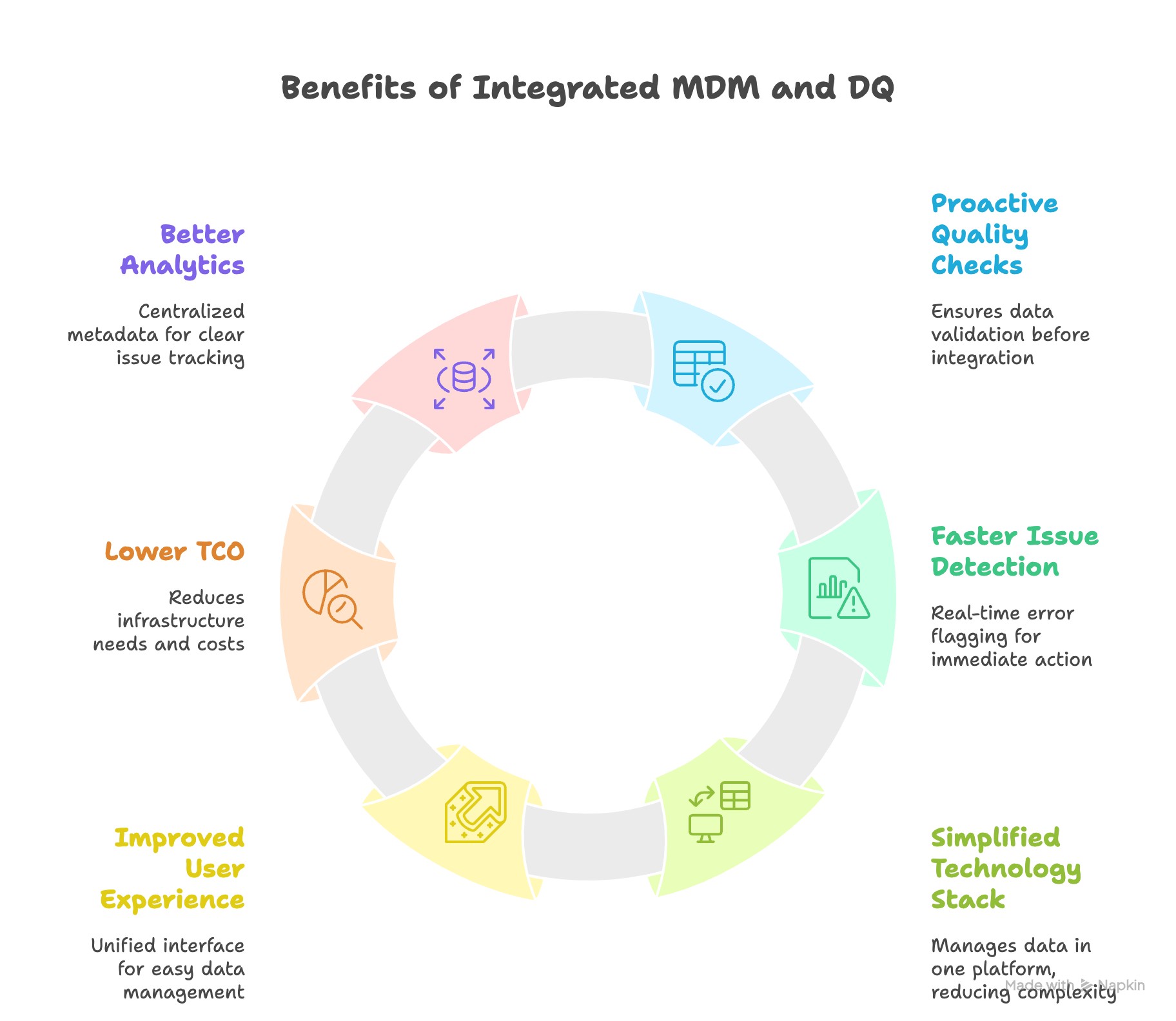
Proactive Quality Checks: Embed Data quality checks directly into Master Data Management workflows, ensuring records are validated and standardized before forming the golden record — preventing issues at the source.
Faster Issue Detection: Real-time validation flags errors instantly, minimizing the lag between data entry and issue detection unlike batch-mode data quality tools that alert you only after issues spread.
Simplified Technology Stack: Manage everything within one MDM software platform, removing the need for multiple tools, custom connectors, or redundant integrations simplifying upgrades and reducing complexity.
Improved User Experience: A unified interface empowers stewards, analysts, and business users to manage both Master Data Management and data quality rules seamlessly, improving adoption and collaboration.
Lower Total Cost of Ownership (TCO): Consolidating MDM solutions and data quality tools into one ecosystem reduces infrastructure needs, license costs, and maintenance — streamlining governance and cutting operational expenses.
Better Analytics: Centralized metadata and data lineage tracking make it easier to trace data quality issues back to their source, ensuring transparency and improving decision making.
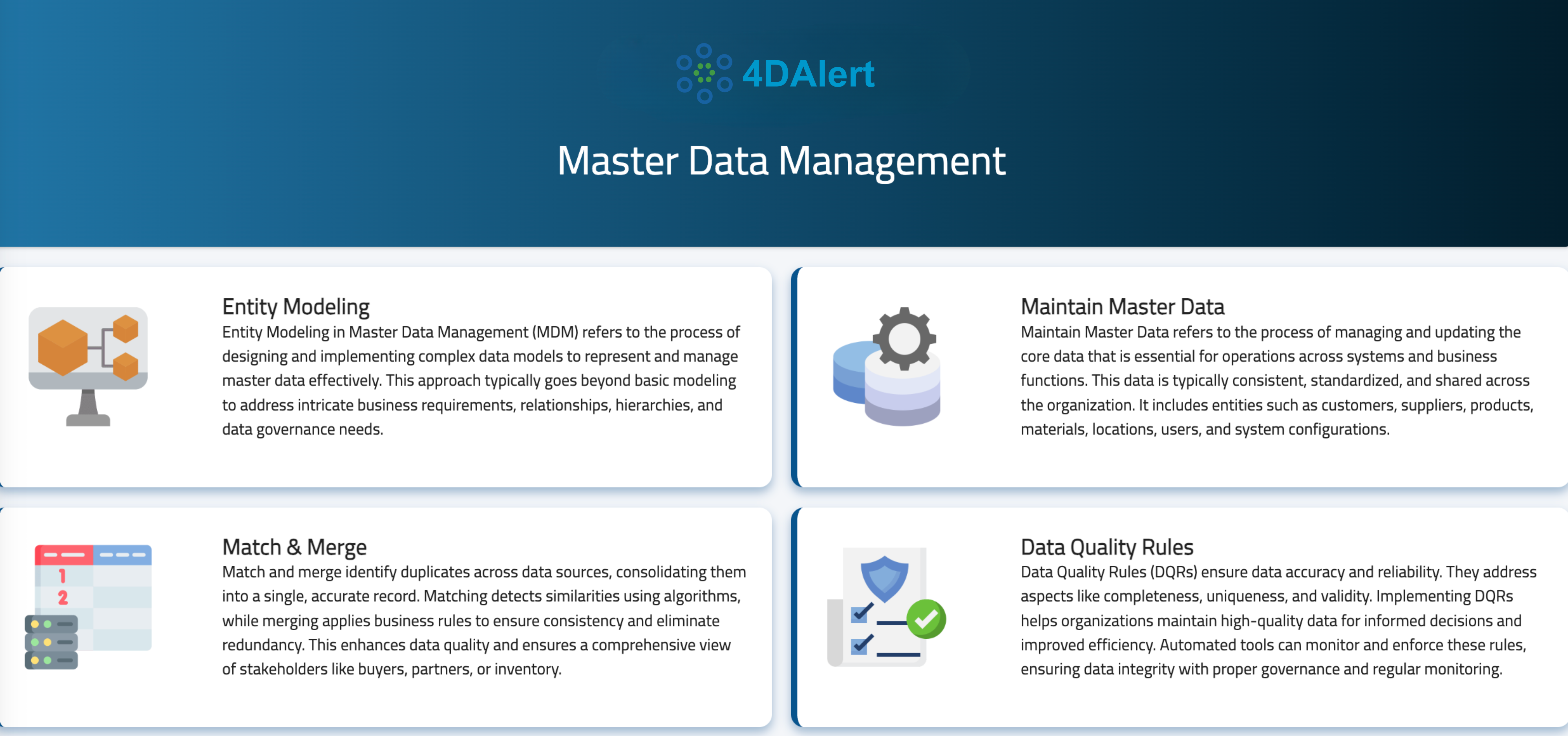
How Does 4DAlert’s Integrated MDM and Data Quality solution deliver a smarter solution?
1 Simplified Integration and Synchronization
Challenge: When MDM and data quality management systems are separate, syncing rules and data requires complex integrations, introducing inefficiencies and risks.
How 4DAlert Fixes It: 4DAlert integrates both Master Data Management and data quality management into a single cloud MDM solution, streamlining synchronization, eliminating middleware, and ensuring consistent enforcement in real time.
2. Proactive Issue Detection and Resolution
Challenge: Separate systems often identify issues only after they enter the MDM environment, leading to delayed cleanup.
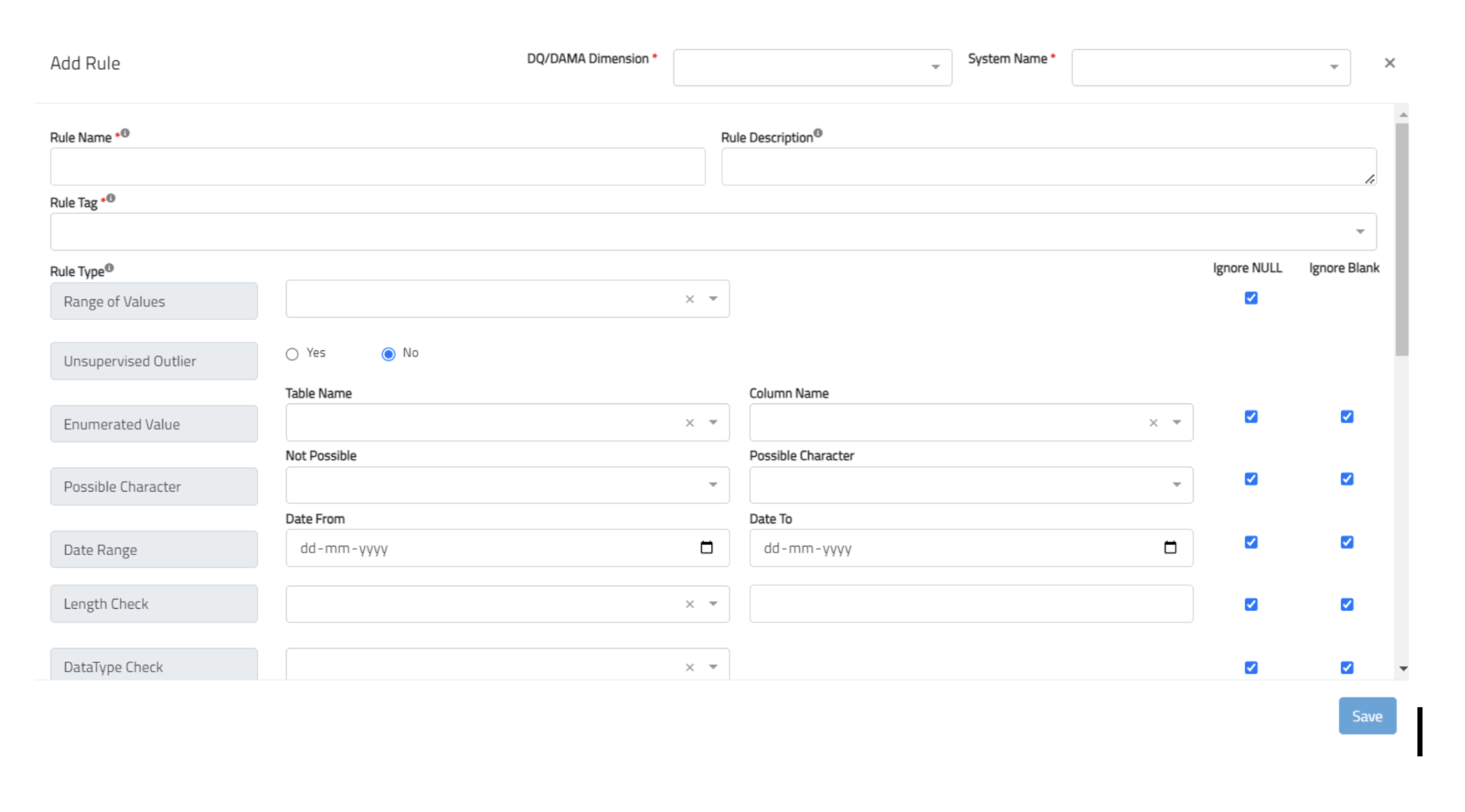
How 4DAlert Fixes It: 4DAlert embeds data quality checks directly into MDM workflows, validating and cleansing data at the point of entry. This proactive approach ensures errors are detected early and prevents poor-quality data from spreading.
3 Consistent Validation and Rule Enforcement
Challenge: Inconsistent business rules across systems lead to conflicting versions of data and eroded trust.
How 4DAlert Fixes It: By combining Master Data Management and Data Quality into a single platform, 4DAlert enforces uniform validation rules across all data domains. This ensures every team works with the same accurate and verified data, improving collaboration and decision-making. The unified data quality score framework further helps maintain consistency across the enterprise.
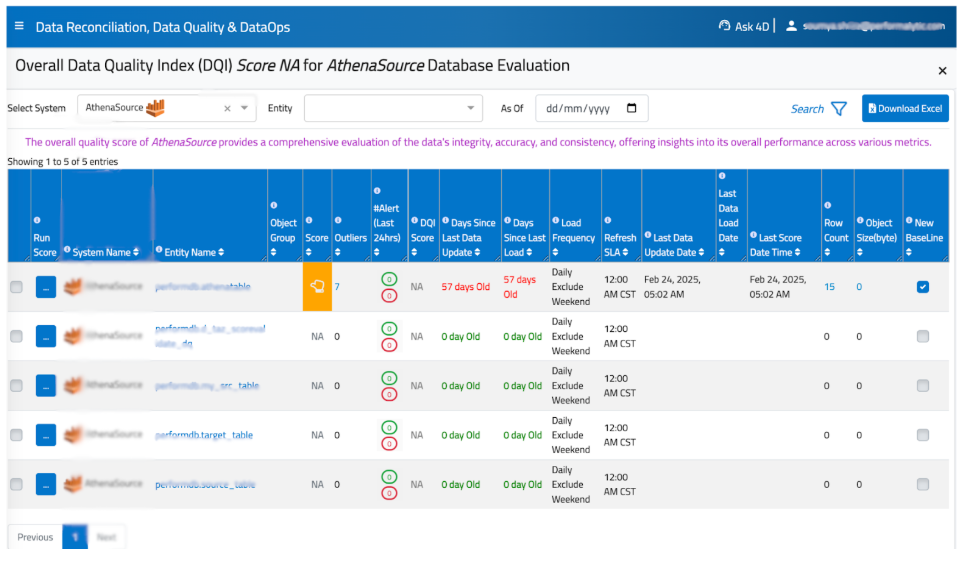
4. Reduced Operational Costs and Complexity
Challenge: Maintaining separate systems for MDM and DQ increases expenses through duplicate licensing, training, and maintenance requirements.
How 4DAlert Fixes It: Consolidating both functions within one cloud-native MDM platform minimizes costs and reduces resource demands. With fewer integrations, less infrastructure, and a simplified support process, organizations achieve operational efficiency and a lower total cost of ownership (TCO).
5. Unified Visibility and Control
Challenge: Fragmented data lineage and audit trails make it hard to trace the origins of poor-quality data and enforce accountability.
How 4DAlert Fixes It: 4DAlert centralizes metadata and data lineage tracking across both MDM and DQ layers. This provides full transparency into data flow, enabling teams to trace issues to their source and strengthen governance and compliance efforts.
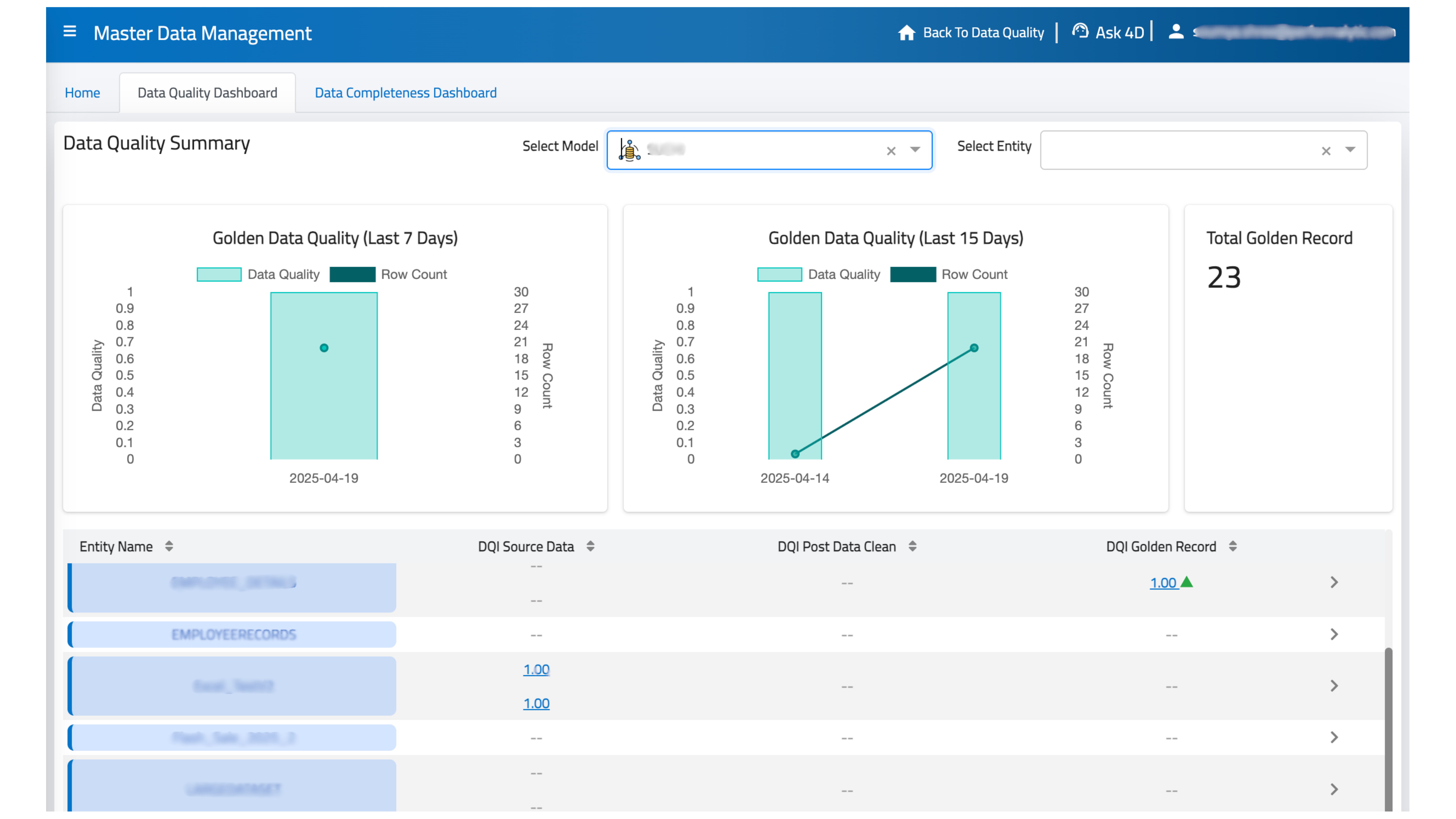
The Bottom Line
Treating Master Data Management and Data Quality as separate efforts means two tools, double the complexity, and higher risk.
Unifying them with 4DAlert’s cloud MDM solution enables automation, trust, and real-time quality validation creating a stronger data foundation across the enterprise.
So, the next time you plan an MDM initiative, ask yourself: are you solving for quality or just structure?
Because in the world of enterprise data, those two aren’t separate — they’re two sides of the same coin.
Take control of your Master data Management with 4DAlert.
Ultimately, 4DAlert simplifies how organizations define, manage, and align master data across ERP systems with its cloud-native, AI-powered MDM platform embedding automation and data quality from day one.
Book a demo and see how 4DAlert streamlines modern MDM.