

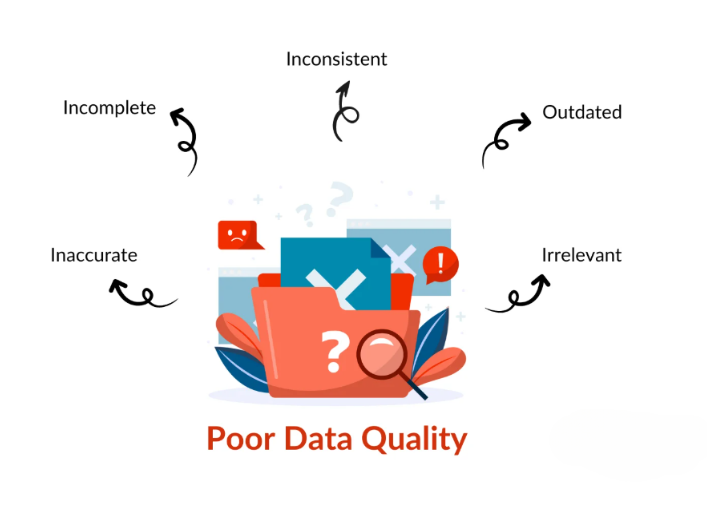
In today’s digital landscape, organizations process vast amounts of data daily. Whether it’s customer transactions, supply chain logistics, or financial reporting, data quality drives strategic decisions across industries. However, the increasing complexity and volume of data bring significant challenges. Inaccurate, incomplete, or inconsistent data can lead to misguided decisions, operational inefficiencies, and compliance risks. Businesses need to ensure data quality to maintain trust, enhance decision-making, and drive competitive advantage.
The High Cost of Poor Data Quality
Poor data quality is more than just an inconvenience—it has tangible financial and operational repercussions. Studies show that organizations lose millions annually due to bad data, as it leads to incorrect reporting, flawed analytics, and wasted resources. For instance, a business relying on faulty sales data may make erroneous pricing or inventory decisions, leading to lost revenue and customer dissatisfaction. In industries like healthcare or finance, data errors can cause compliance violations, resulting in severe legal and reputational damage.
One common issue businesses face is the challenge of maintaining consistent data loads in analytics platforms. Many enterprises operate under strict Service Level Agreements (SLAs) that dictate how and when data should be available. Any disruption in data flow—whether due to missing records, inconsistencies, or processing failures—can significantly impact real-time reporting and business intelligence efforts. Imagine a retail company trying to analyze sales trends, only to find that key transaction records from peak shopping hours are missing. Such a scenario can distort revenue projections and hinder timely decision-making.
Addressing Data Quality Challenges with Intelligent Automation
Maintaining high-quality data requires more than just periodic checks; it demands continuous data monitoring and proactive resolution of issues. This is where advanced AI/ML-driven data quality solutions come into play. Automated tools can detect anomalies in real time, ensuring that businesses are not making decisions based on flawed or incomplete data.
Take, for example, an organization tracking multiple key metrics such as revenue, sales volume, and customer discounts. Without an intelligent system, discrepancies between these data points might go unnoticed until they manifest as major reporting errors. A robust AI-driven data quality tool can simultaneously scan and analyze these metrics, identifying inconsistencies and alerting teams before they escalate into costly mistakes.
Another critical aspect of data quality is maintaining compliance with predefined standards. Businesses often work with restricted value sets—such as specific currencies, regions, or product categories—where deviations can signal errors or fraud. An advanced data quality solution can automatically verify compliance, flagging any values that fall outside expected parameters and preventing incorrect data from infiltrating key business processes.
Seasonality also plays a crucial role in data integrity. Many businesses experience predictable fluctuations in data, such as increased sales during holiday seasons or financial reconciliations at month-end. Without a system that accounts for these trends, sudden spikes or dips might be misclassified as errors, leading to unnecessary alerts or overlooked anomalies. A well-designed AI-driven system can distinguish between expected seasonal patterns and genuine data issues, enhancing accuracy in data monitoring.
Addressing Data Quality Challenges with 4DAlert
Ensuring high-quality data requires an intelligent and automated approach. 4DAlert, an AI/ML-powered data quality solution, helps businesses proactively detect and resolve data inconsistencies before they impact decision-making. Here’s how it addresses key challenges:
1. Multi-Metric Data Analysis for Hidden Anomalies
Many businesses track multiple key performance indicators (KPIs) simultaneously, such as revenue, sales volume, discount rates, and customer churn. However, when these metrics are analyzed in isolation, crucial discrepancies might go unnoticed. 4DAlert scans all key metrics simultaneously, identifying anomalies across various data points to ensure a more comprehensive and accurate analysis. By correlating seemingly unrelated data trends, businesses can uncover hidden anomalies that could impact financial forecasting, operational efficiency, and strategic planning.
2. Automated Data Quality Checks with Predefined Metrics
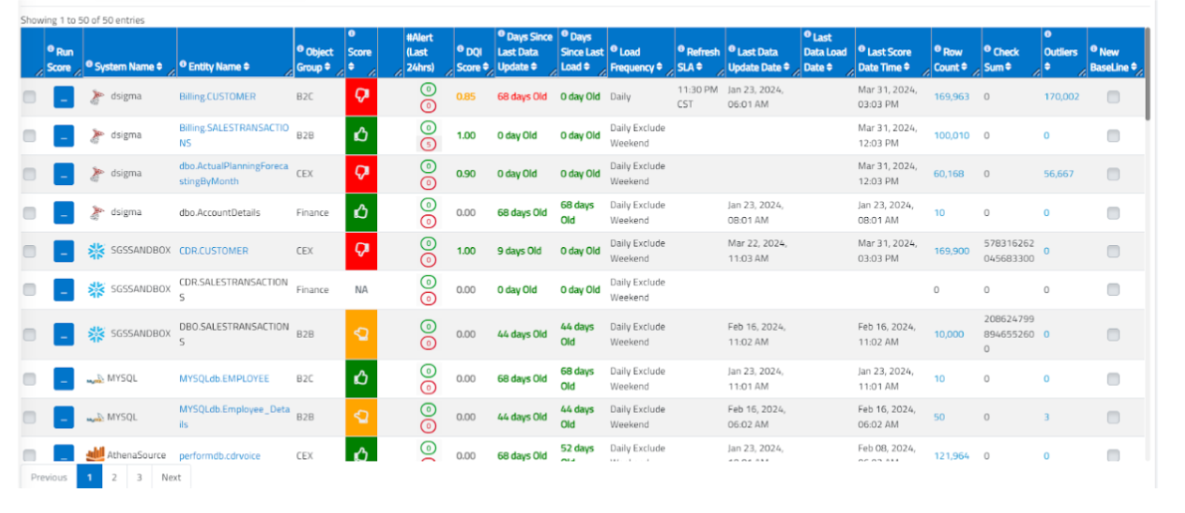
Traditional data validation methods often require manual intervention, making them slow, error-prone, and inefficient. 4DAlert eliminates these issues by applying predefined data quality metrics to automatically detect and correct anomalies in real time. By continuously monitoring data consistency and completeness, 4DAlert reduces dependency on human oversight and ensures that businesses operate with accurate, up-to-date data at all times. This automation not only saves time but also enhances data reliability, allowing teams to focus on more strategic initiatives rather than spending hours manually verifying datasets.
3. Compliance Assurance with Enumerated Value Checks
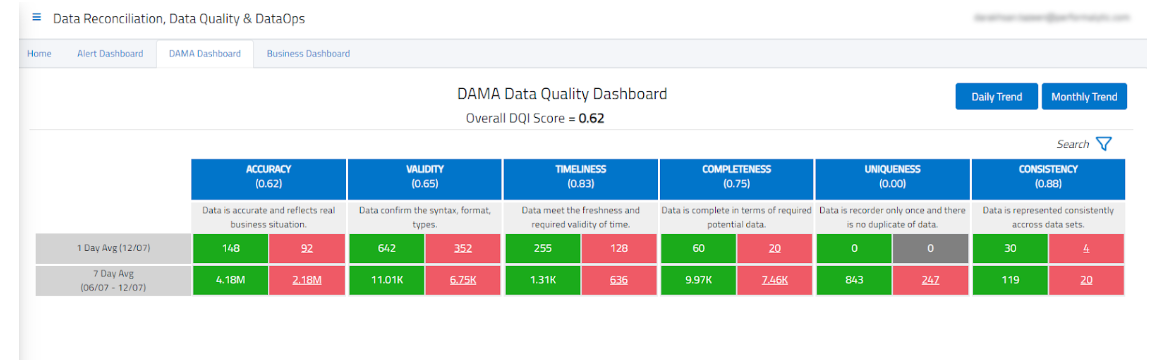
Organizations frequently operate within strict regulatory and industry standards, requiring data to conform to specific predefined values. Whether it’s ensuring that currency codes are valid, geographic regions match standard classifications, or customer categories are correctly assigned, any deviation from these predefined sets can result in data inconsistencies and compliance risks. 4DAlert continuously verifies that data aligns with established parameters, flagging any discrepancies immediately. This proactive compliance monitoring prevents incorrect data from being processed or used in decision-making, reducing regulatory risks and maintaining data integrity across business functions.
4. Intelligent Seasonality and Trend-Based Anomaly Detection
Business data is not static—seasonal trends and cyclical patterns influence everything from sales volumes to financial transactions. Standard monitoring systems often fail to differentiate between expected seasonal changes and genuine data anomalies, leading to unnecessary alerts or, worse, overlooked errors. 4DAlert leverages AI/ML to understand historical data trends, predict seasonal variations, and detect unusual spikes or drops that fall outside expected patterns. Whether it’s recognizing end-of-month financial fluctuations or detecting irregular shopping trends during holiday seasons, 4DAlert ensures that only true anomalies are flagged for review, improving both efficiency and accuracy in data monitoring.
5. Custom Metrics for Tailored Data Quality Monitoring
Every business has unique data quality requirements, and one-size-fits-all solutions often fail to address specific operational needs. 4DAlert offers a powerful customization feature that allows organizations to define and implement their own quality metrics using SQL queries. Whether it’s monitoring supplier performance, tracking product return rates, or ensuring the consistency of customer segmentation data, businesses can create tailored rules that align with their strategic goals. This flexibility ensures that companies maintain control over their data quality, adapting their monitoring processes to meet evolving business demands and regulatory requirements.
The Power of AI-Driven Data Quality Management
Modern data quality management goes beyond just detecting errors—it empowers businesses with actionable insights. With 4DAlert, organizations generate real-time data quality scores, providing complete visibility into their overall data health. These insights help data engineers, business teams, and decision-makers quickly pinpoint problem areas and take corrective action before issues escalate.
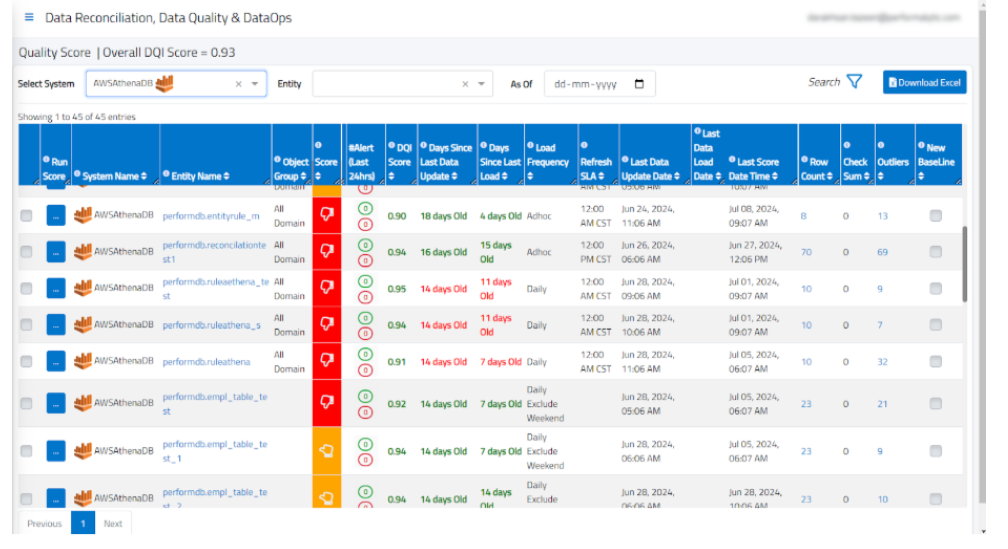
Furthermore, 4DAlert’s AI-powered anomaly detection and advanced metric correlation ensure that businesses can trust their data at all times. The system continuously monitors data integrity, automating quality checks and dynamically analyzing trends to prevent long-term data inconsistencies.
Conclusion
In an era where data fuels every business decision, ensuring high data quality is no longer optional—it’s a necessity. Poor data quality can lead to financial losses, compliance risks, and misguided strategies, while high-quality data empowers businesses with accuracy, efficiency, and trust.
Intelligent automation, like 4DAlert, plays a crucial role in maintaining data integrity. By proactively identifying anomalies, automating quality checks, and ensuring compliance, 4DAlert helps organizations safeguard their data against inconsistencies and errors. With AI-driven monitoring and real-time insights, businesses can make data-driven decisions with confidence, gaining a competitive edge in today’s fast-paced digital landscape.
Investing in robust data quality solutions isn’t just about fixing errors—it’s about unlocking the full potential of data to drive innovation, efficiency, and long-term success.
Want to explore more about data observability, AI-driven automation, and best practices for data quality?
Read More Blogs:
Automatic Data Reconciliationdata Quality And Data Observability
.