
Solution / Data Quality
Data Quality & Observability
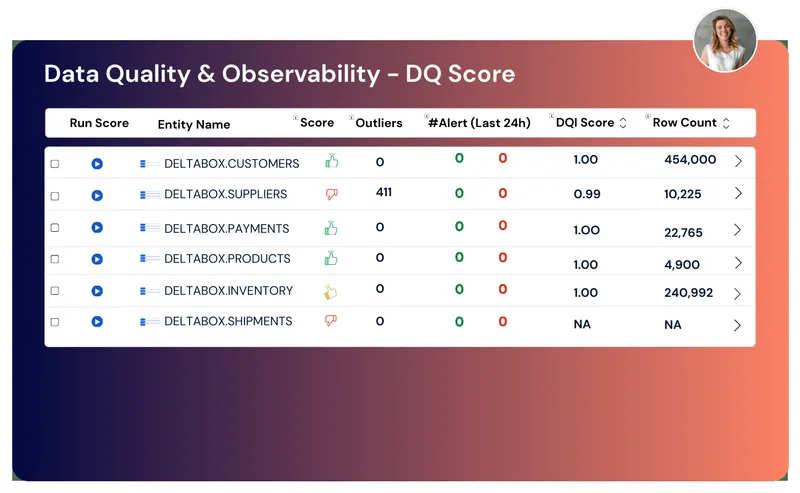
Data Quality and Observability is a framework to continuously monitor, validate, and ensure data reliability across the enterprise systems. In modern data ecosystems, analytics platforms rely on SLA-driven, complex data pipelines. Any interruption such as schema modifications, load failure or data anomalies can directly affect downstream reporting and business decision making. 4DAlert solves these problems by offering a data quality and observability layer powered by Artificial Intelligence that keeps track of data throughout ingestion, transformation, and consumption phases, ensuring that the data is delivered in a consistent, accurate, and reliable manner to the various systems.
Overview
What is Data Quality & Observability?
Data Quality & Observability helps to ensure only reliable, high-quality data across your data landscape.
It helps organizations to:
It is a method of quality verification and observability indicators — freshness, volume, schema, and distribution — that offers a comprehensive picture of data health and performance.
- End-to-end monitoring of data pipelines
- Identify anomalies, failures and inconsistencies at an early stage
- Make sure that data is accurate, complete, and timely
- Have sound analytics and reporting
Key Features
What's inside
Value & Outcomes
Confident Decision Data
Make sure that dashboards, reports and analytics run on tested and quality data assets.
Proactive Issue Detection
Detect anomalies, load failures and data degradation at an early stage minimizing mean time to detection and resolution.
End-to-End Data Visibility
Have a full view of data pipelines in ingestion, transformation and consumption layers.
Improved Data Reliability
Always check and authenticate data behavior to ensure similar performance in systems.
Use Cases
Real-world applications of Data Quality & Observability.
Data Pipeline Monitoring
Monitor health of pipelines, identify failures and deliver data in time across systems.
Analytics Data Validation
Make sure that reports and dashboards are driven by proper and complete data.
Anomaly Detection in Data Trends
Detect abnormal spikes, falls, or change of behavior with AI-based pattern recognition.
Schema Change Impact Analysis
Identify schema modifications and determine their downstream effect on pipelines and analytics.
Data Freshness Monitoring
Track data load frequency and update datasets according to SLA requirements.
Cross-System Data Consistency
Make sure that there is consistency of data between warehouses, applications and downstream systems.
Why Choose 4DAlert
Single Quality + Observability Layer
Unify data validation and observability on one platform to monitor data health comprehensively.
AI-Powered Anomaly Detection
Machine learning and statistical analysis to detect complex data problems.
End-to-End Pipeline Coverage
Real-time monitoring of data at ingestion, transformation, and consumption layers.
Flexible & Customizable Framework
Establish business-specific rules, thresholds and metrics for any data environment.
Ready to see Data Quality & Observability in action?
Talk to our team for a personalized walkthrough of how 4DAlert fits into your existing data stack.
FAQ
Frequently Asked Questions
What is data quality and observability?
Data quality and observability involves continuously monitoring, validating, and maintaining the health, accuracy, completeness, freshness, and reliability of data across enterprise data systems.
What is the difference between data quality and data observability?
Data quality focuses on whether data is accurate, complete, and reliable, while data observability provides visibility into data pipelines and system behavior to help identify issues proactively.
How does 4DAlert monitor data quality?
4DAlert continuously monitors data across ingestion, transformation, and consumption layers using quality and observability metrics such as row count, null values, distinct values, schema, and distribution.
Can 4DAlert detect data anomalies automatically?
Yes. 4DAlert uses AI-based pattern recognition, machine learning, and statistical analysis to identify anomalies, failures, and changes in data behavior.